


The Guardian, Thursday 24 September 2026
George Monbiot
Changes in guidance and science seem to have little impact on millions of devastated lives. It’s a shocking social crisis playing out behind closed doors
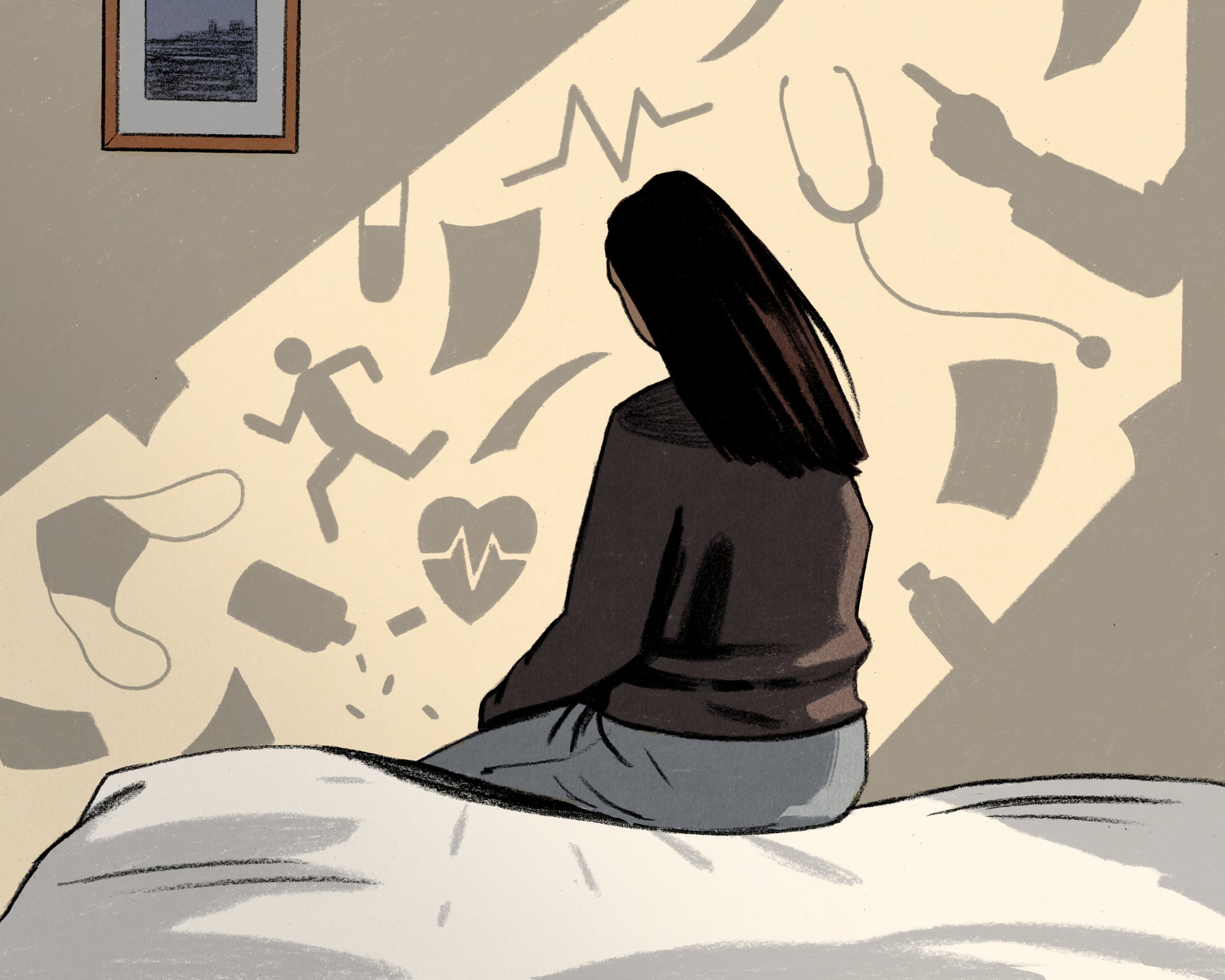
I’ve spent my working life covering neglected issues. But few are neglected like the devastating chronic condition ME/CFS (myalgic encephalomyelitis, or chronic fatigue syndrome). In severe cases, the illness shuts down people’s lives almost entirely, causing an extreme loss of energy and a wide range of physical and cognitive symptoms that can prevent patients from working, socialising and, sometimes, even moving or eating. Yet these people have been more or less airbrushed from our minds.
To find out what this neglect looks like in practice, this week I put out a call on Bluesky asking people with ME/CFS about their recent experiences of treatment. I was immediately inundated with horrifying testimonies. “I’ve just been completely abandoned”; “a 10-year waiting list for treatment”; “we’ve given up seeking medical support”; “stuck in limbo”; “I just felt utterly unheard, invalidated”. I’ve been sent hundreds of shocking and heart-rending accounts.
Exact numbers are hard to establish, but in the UK alone, an estimated 400,000 people live with the condition. It affects women far more than men, by a ratio of about 4:1, according to a study in England. The number of people with long Covid, some of whom meet the diagnostic criteria for ME/CFS, was estimated in 2024 at 2 million in England and Scotland.
You might have imagined politicians and the media would be all over it. Instead, this great social crisis is met with silence or worse. Some outlets, despite the overwhelming weight of evidence, have mocked or trivialised these conditions.
There’s a long, dark history here, rooted in centuries of dismissal of predominantly female illnesses as “hysterical”, and amplified in recent decades by government attempts to reduce the benefits bill and insurers’ attempts to reduce payouts. If you can establish that a condition is caused by malingering, poor self-care or a negative attitude, you won’t have to cough up.
Official guidance in many countries was informed by a series of deeply flawed studies that purported to show these illnesses could be treated with cognitive behavioural therapy (CBT), or graded exercise therapy (GET). In 2020, the National Institute for Health and Care Excellence (Nice) found that the quality of all the research promoting these therapies as curative treatments for ME/CFS was either “low” or, in most cases, “very low”. In 2021, it stopped recommending these therapies as primary treatments. We now know CBT cannot treat the condition (though it can sometimes help patients to come to terms with it), while GET is not only useless but actively dangerous, as exercise can trigger one of the most devastating ME/CFS symptoms: post-exertional malaise (PEM). PEM robs people of their remaining energy, rendering many patients bedbound, sometimes incapable of almost all movement.
Since then, two other things have happened. At the inquest into the death of a young ME/CFS patient, the coroner ruled that provision in the health service for patients with severe ME “was and is nonexistent”. Something would have to be done. And a number of seeming scientific breakthroughs, some very recent, have begun inching towards identifying possible biological causes of both ME/CFS and long Covid. Now, or so we should hope, it’s undeniable.
So what has changed as a result of these shifts? Alongside the horror and heartbreak in the testimonies of the people who emailed me, I was struck by the sense of sheer relief that someone, anyone, was asking the question.
Many said they are still being treated as if they have a psychological illness, and still being pushed into GET and CBT. One patient told me: “I’ve gone from relatively mild to now mostly house- and bedbound, largely thanks to repeated attempts at graded exercise and ‘pushing through’.” A few days ago, an NHS clinic told another patient to undertake “graded exercise” and “simply to walk, despite the fact I’m a wheelchair user”.
One mother told me “the consultant cardiologist recommended a graded exercise programme” and “a treadmill test” for her bedbound son. When she told him this contradicted Nice guidelines, he replied: “Well, what do you want me to do?” Another made the same challenge to her GP, but the doctor “denied this strongly and reiterated to my daughter that she should do the exercises”. This is very common: many doctors, I’m told, seem unaware of the new guidelines and react defensively when challenged. In many practices, GET has simply been rebranded as “building tolerance” or “pacing up” or “a little more activity each day”.
Patients report being treated with “contempt and derision”. Loads are still being offered CBT. Some have been propelled by NHS doctors towards quack private “cures”, now offered by a growing industry that preys on people’s desperation.
Others tell me they’ve not been pushed into inappropriate treatments, but “that’s only because I receive no treatment for it whatsoever”. Some have had to explain to their doctors what ME/CFS is. And it gets worse. I’ve been contacted by parents who have been accused of fabricating and inducing illness and even referred to social services, because doctors who seem to know nothing about ME/CFS believe they are making up their children’s symptoms.
It’s as if nothing has been learned. Perhaps that’s not surprising. A freedom of information request to NHS England found that, of the tens of thousands of practitioners who would benefit from it, after a year, only 74 had completed the new learning module on ME/CFS guidance. Meanwhile, as recently as last summer, the Department for Work and Pensions was still teaching its trainees elements of the old, discredited view of the condition. And, as the Liberal Democrat MP Tessa Munt, a hero of this story, tells me: “The piecemeal offerings in the government’s final delivery plan are not going to touch the system-wide failings.”
It’s not only the UK. I’ve been contacted by patients from around the world. In Sweden and Australia, official guidance still recommends GET and CBT. In Switzerland, I’m told, treatment is spiralling backwards, with a new wave of psychologisation. Norway, Finland and the Netherlands, despite their progressive medical reputations, sound like a waking nightmare for ME/CFS patients.
Of course, as there is no effective treatment, it’s a difficult situation for doctors as well as patients. But even worse than no solutions is false solutions, and a dangerous, gaslighting, even punitive approach to a terrible disease.
Across the decades, millions of people have been neglected, dismissed and mistreated, and still it goes on. We need to ask why so many patients have been abandoned, why discredited and dangerous treatments continue to be prescribed and why ignorance and neglect still dominate, in the health system and beyond. In other words, there has seldom been a stronger case for a public inquiry.
George Monbiot is a Guardian columnist