


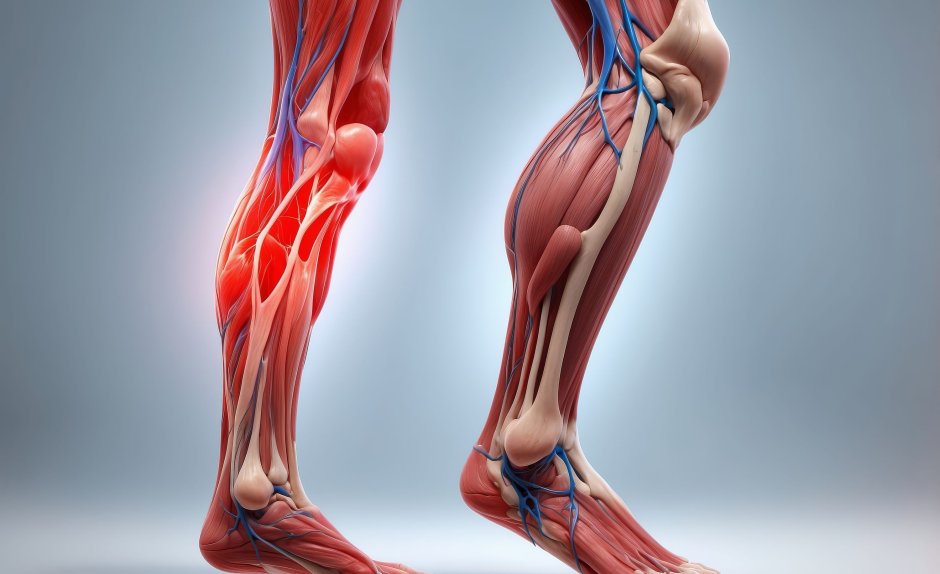
The reduced exercise capacity and muscle complaints in people with post-COVID and ME/CFS (Myalgic Encephalomyelitis / Chronic Fatigue Syndrome) cannot simply be explained by poor fitness or prolonged inactivity. The muscles of these patients function differently in several respects compared to those of healthy people who have been inactive for a long time. This is the conclusion of new research by Vrije Universiteit Amsterdam and Amsterdam UMC. The results of the study are published today in Nature Communications.
Exercise scientist and co-lead researcher Rob Wüst of the Vrije Universiteit Amsterdam explains: ‘There are indications of abnormalities in muscle fibers, energy production, and oxygen supply. Our study underscores that patients with post-COVID and ME/CFS should not be treated as if they have merely lost fitness. Future diagnostics and rehabilitation must take this into account.’
In the study, the researchers compared people with post-COVID and ME/CFS with a group of healthy people who had maintained strict bed rest for 60 days. Although all groups had lower endurance, the underlying muscle changes proved to be distinctly different.
‘Patients are often told that they are mainly out of shape,’ says Wüst. ‘Our results show that this picture is too simplistic. The muscles of patients with post-COVID and ME/CFS show different changes than the muscles of healthy people after prolonged bed rest.’
Disrupted energy production
After 60 days of bed rest, healthy subjects showed clear muscle atrophy. In patients with post-COVID and ME/CFS, this general muscle breakdown was not observed. However, the researchers did find other abnormalities in the patients’ muscles. For instance, compared to the healthy control group, both patient groups had fewer slow-twitch muscle fibers, which are important for endurance. They also had relatively more fast-twitch muscle fibers, which are muscle fibers that fatigue more quickly.
The researchers also observed signs of disrupted energy production in the muscles. Mitochondria, often described as the cell’s energy factories, functioned less effectively in patients with post-COVID and ME/CFS. Additionally, fewer capillaries were found in the muscles of ME/CFS patients, which may contribute to reduced oxygen supply during exertion.
Importance for treatment and rehabilitation
The findings are important for the way exercise-induced symptoms in post-COVID and ME/CFS are viewed. The results show that the symptoms cannot be easily explained by reduced physical activity or loss of fitness. The muscles of patients function differently in several respects than those of healthy people who have been inactive for a long period.
According to the researchers, this means that treatment and rehabilitation must be better aligned with the biological abnormalities found in these patients. Standard training programs based on normal deconditioning may not be suitable for people with post-COVID or ME/CFS. This is especially true when they suffer from post-exertional malaise: a worsening of symptoms after physical or mental exertion.